01 / Direction
Brief before prompt.
Every article ties back to the same rule: the agent has a named job, receiver, boundary, and source of truth.
Field notes
Five practical notes on the same pattern: AI works when it is installed inside the operator, tied to real work, and checked by proof the room can inspect.
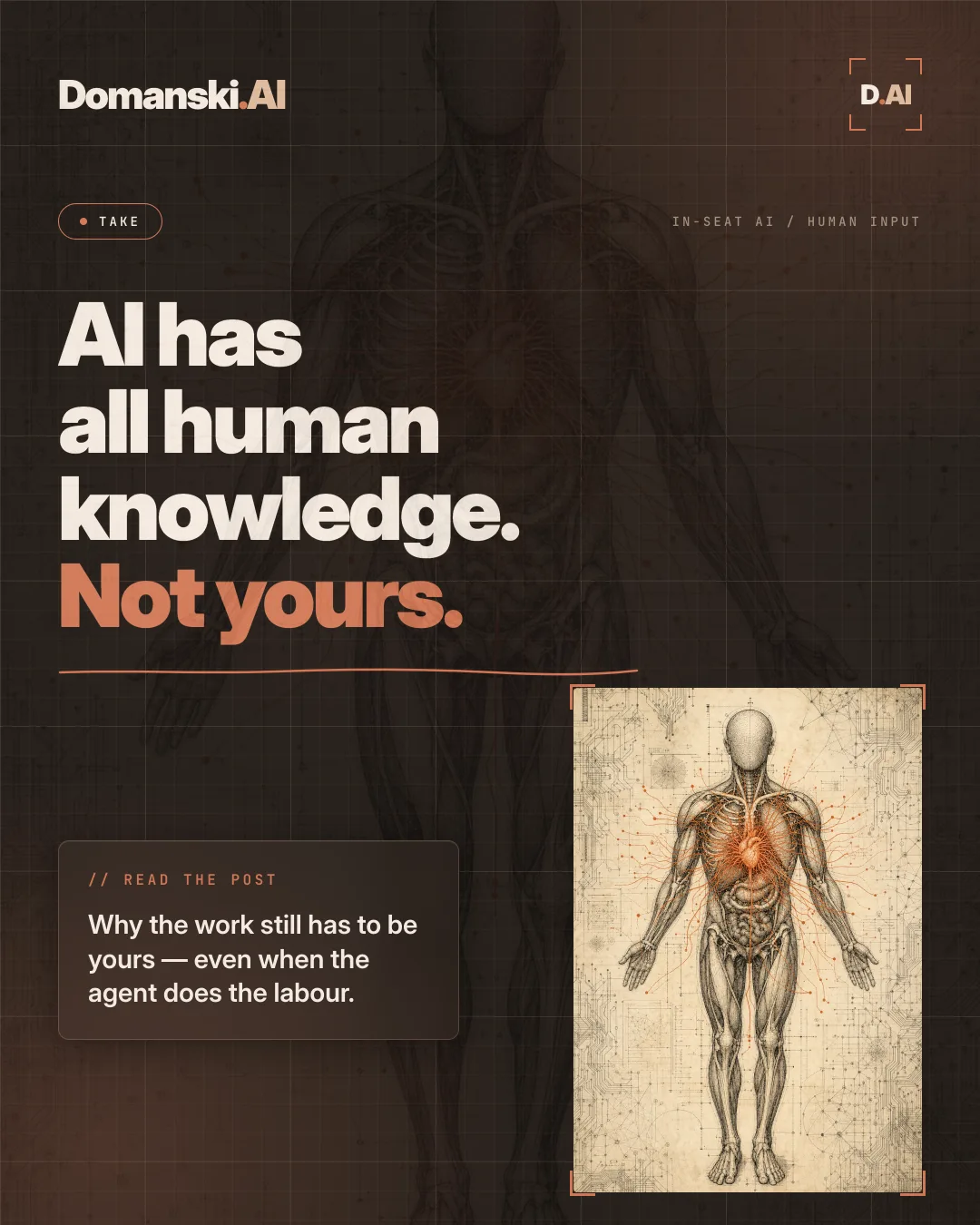
The install is the product. The methodology explains why the agent belongs inside the role that already owns the work.
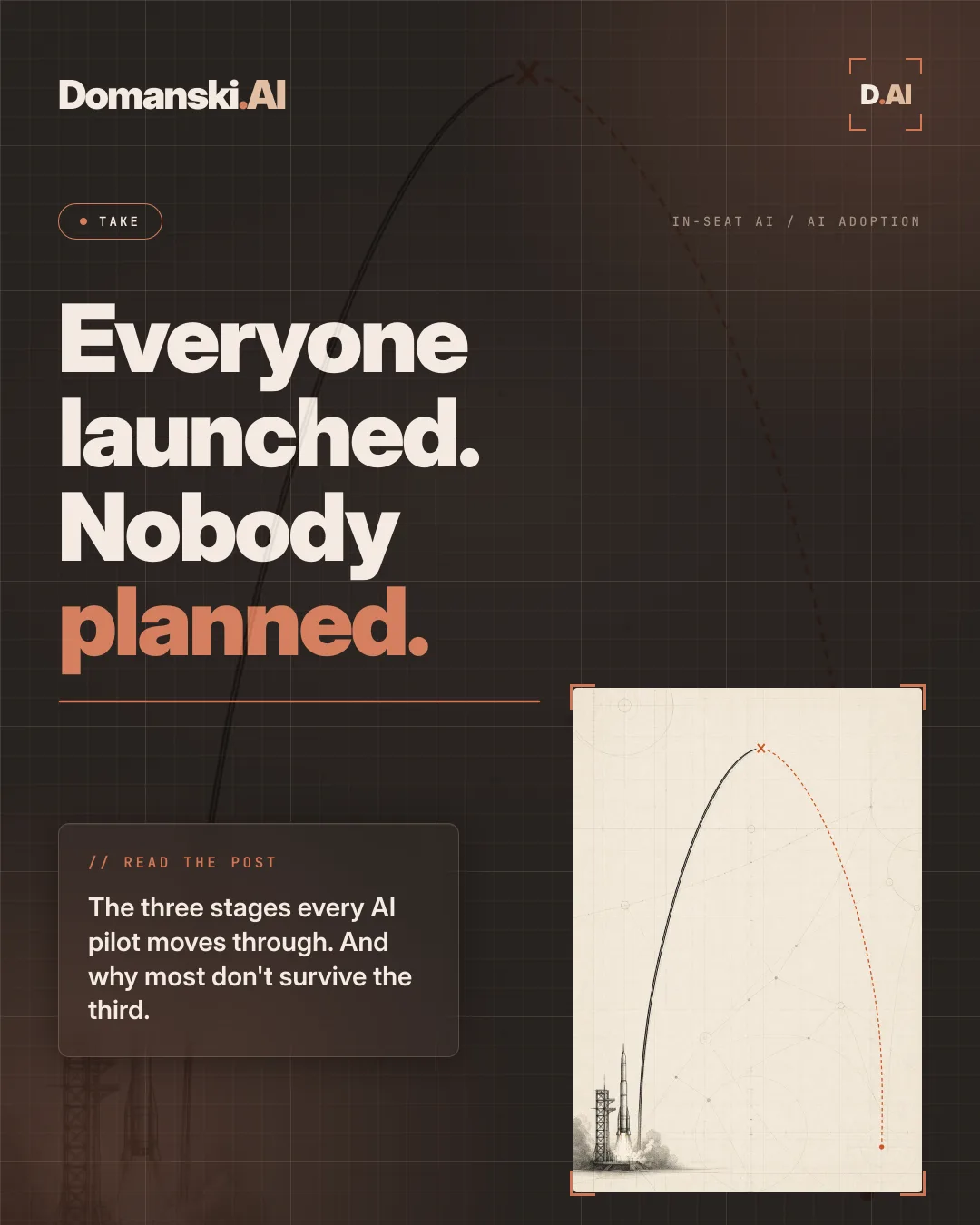
Pilots drift when nobody owns the workflow, the evidence gate, or the adoption loop after the demo ends.
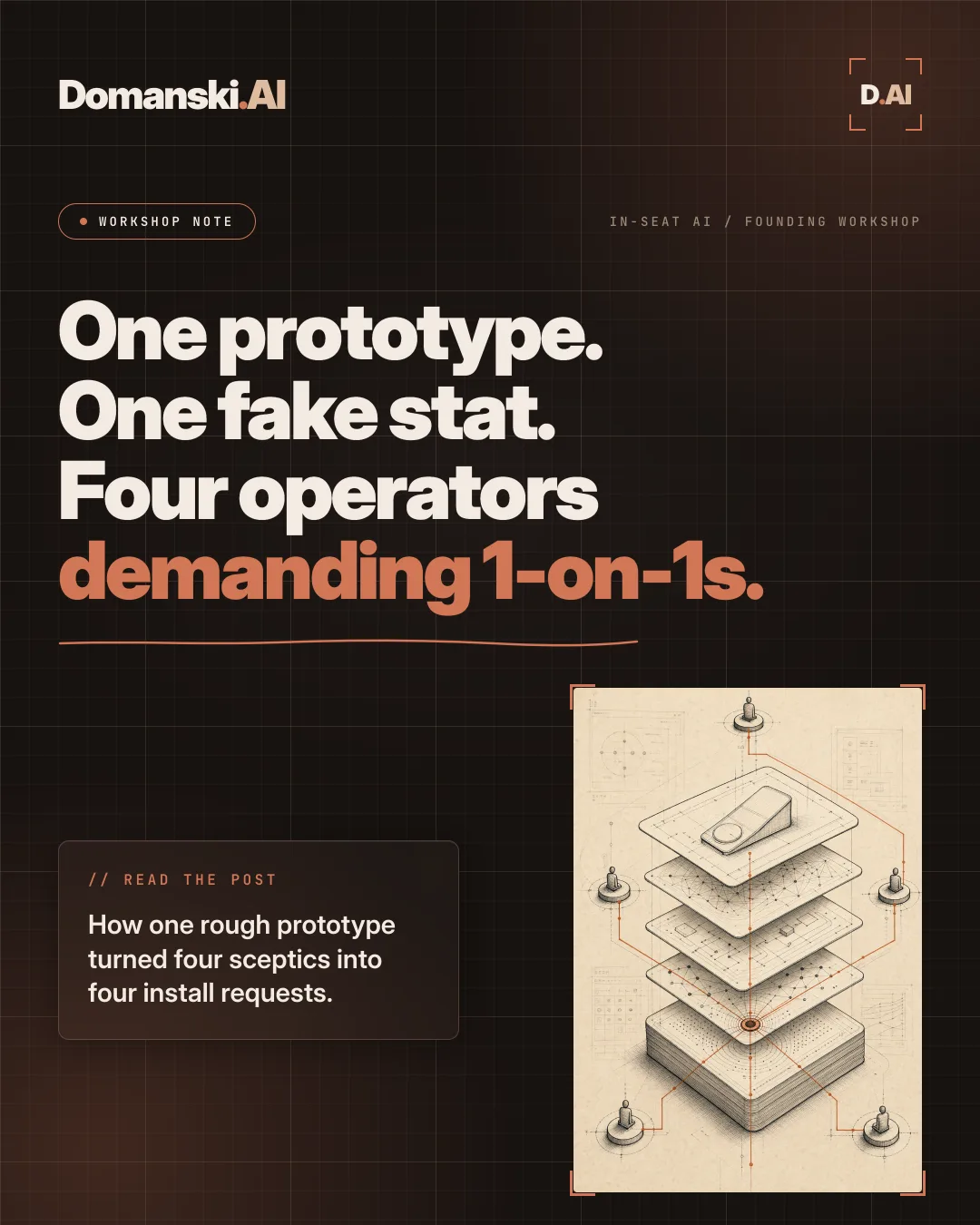
What the Founding Workshop does, what it refuses to be, and why the room matters more than a deck.

The room believes the prototype when it refuses weak input in front of the people who would have shipped it.
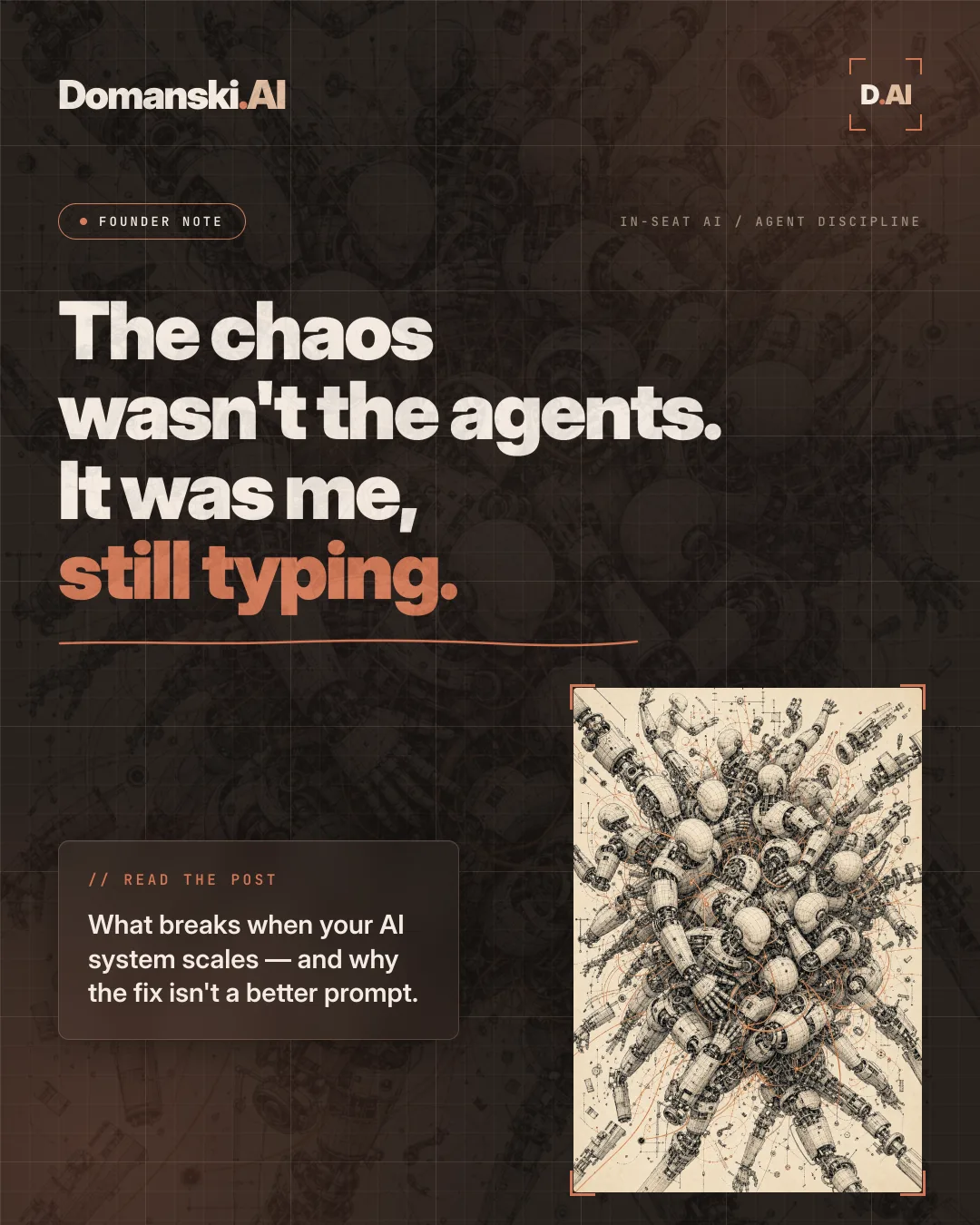
Useful agents need role boundaries, memory, reports, and operator-owned decisions. Otherwise the stack just makes chaos faster.
Start here
The blog is not a separate content channel. It is the editorial layer around the same proof already on the site: the In-Seat AI methodology, the Founding Workshop, and the client-room moments where the pattern becomes visible.
Every article ties back to the same rule: the agent has a named job, receiver, boundary, and source of truth.
The install is durable only when the operator can reopen the work and see what changed.
No abstract AI enthusiasm. The standard is whether a real workflow moves faster with a named human still accountable.
The useful signal is not fluent output. It is the moment the system stops, cites, refuses, or reports.
The blog now behaves like the rest of the site: methodology first, proof second, offer path third. Each article has a route back into the workshop, the case studies, or the In-Seat AI method.